
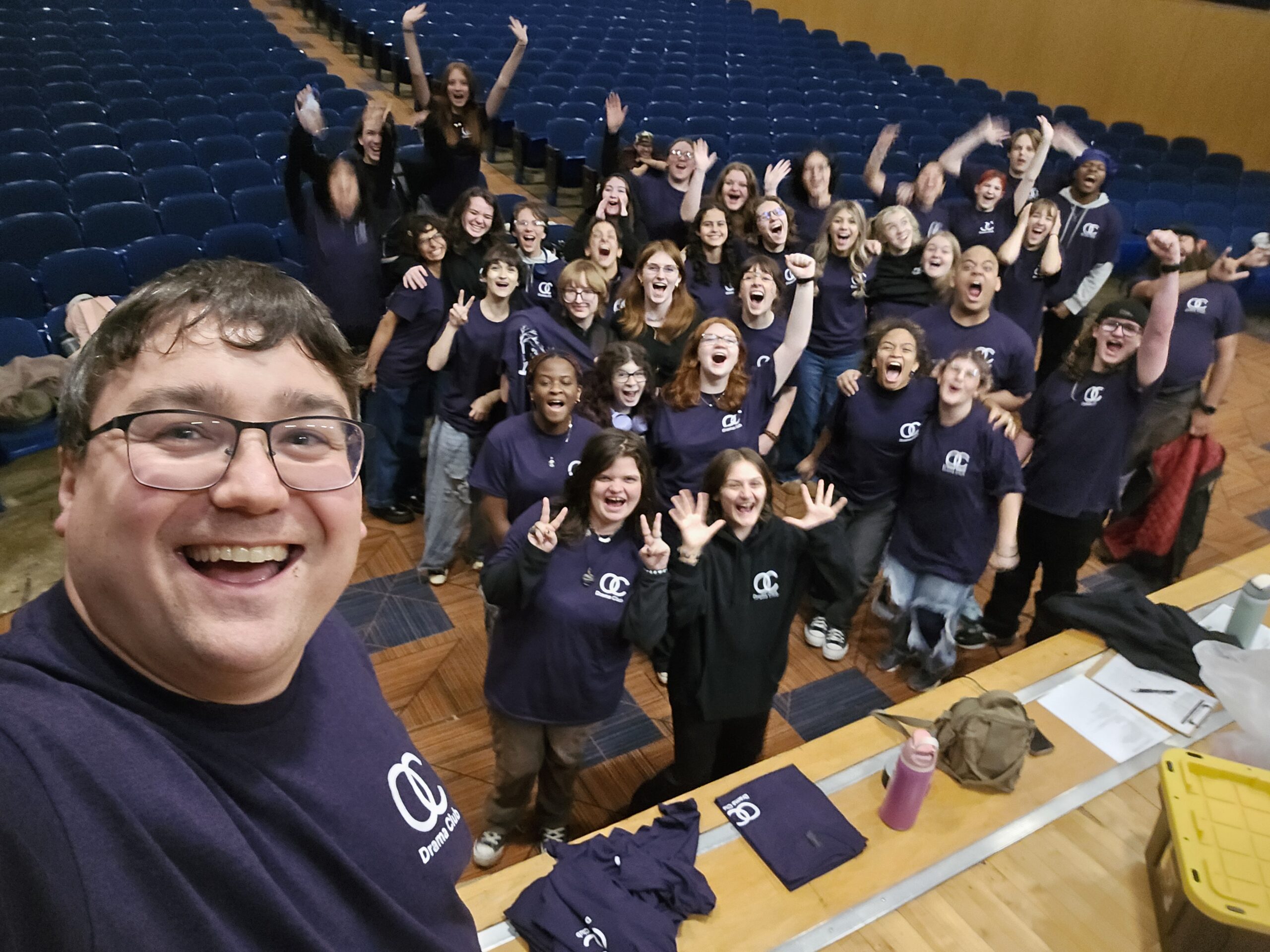
At Orange County High School, the drama program is far more than brilliant lighting, impressive set design and curtain calls. It is an energetic network in which the success of the program rests on a blend of focused leadership, inclusive community building, proactive learning, and strong administrative and civic support.
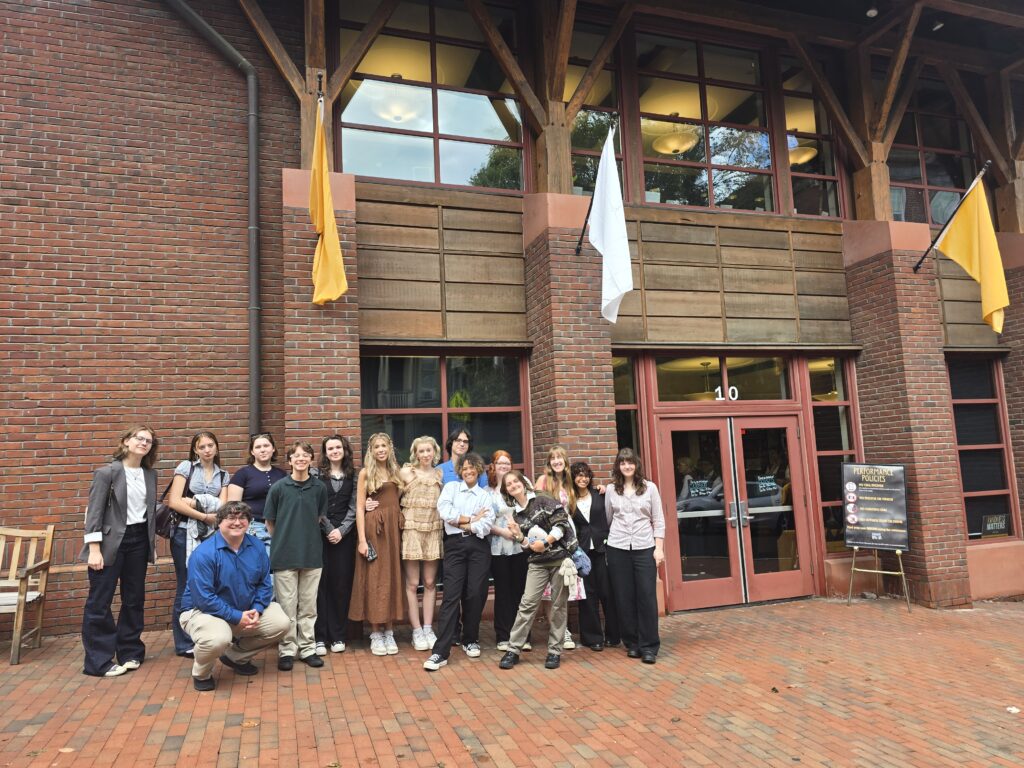
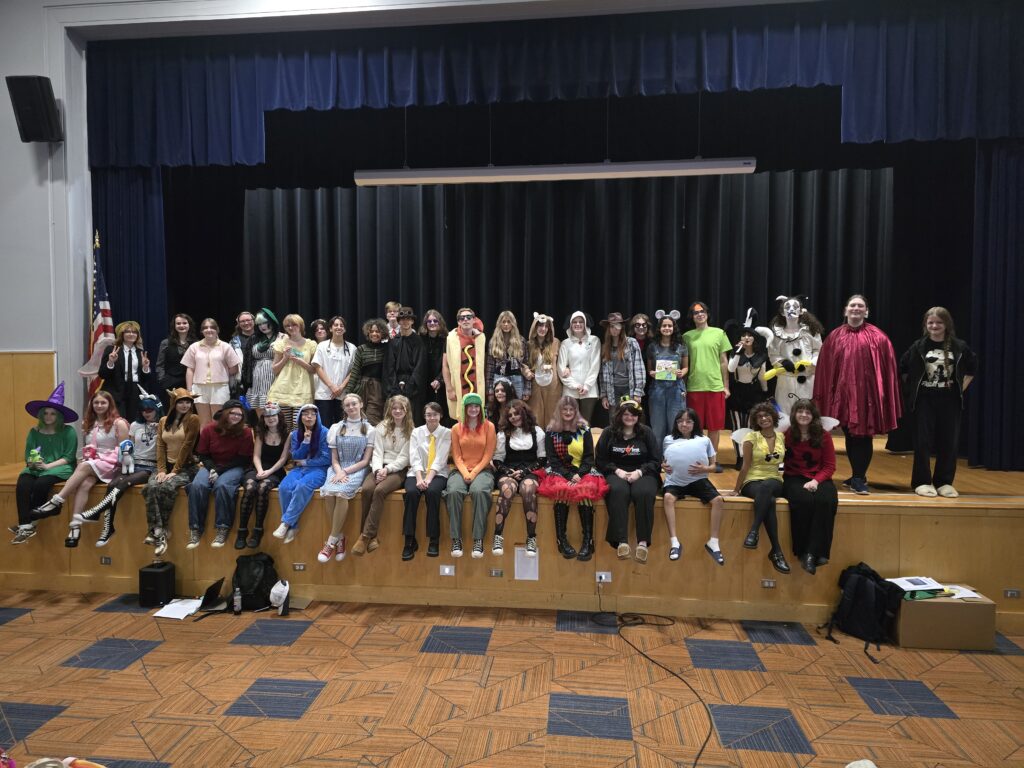
Led by the passionate and innovative director of the OCHS drama department, Robbie Kristel, the program has become a bright spot for the Orange community. Kristel’s program consistently delivers high-caliber productions that challenge and inspire both students and audiences.
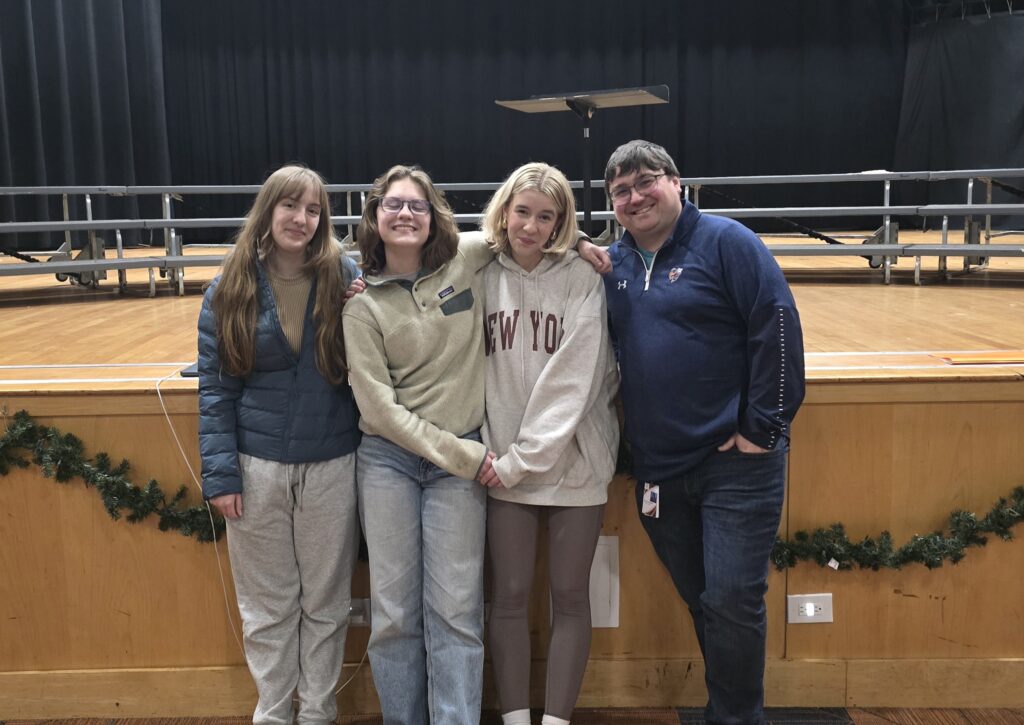
Recently, I interviewed Kristel and three of his standout students in the Green Room, the backstage gathering spot for cast and crew preparation at the high school.
Accompanying Kristel were co-presidents Caitlin Clay and Lyra Day Tusing, along with vice president Eila Doane. Clay, a senior, has been in the program for four years, as has Tusing, while Doane also serves as stage manager for the majority of theater productions.
According to Kristel, more than 70 students are currently involved in the drama program, a number that continues to rise.
“We have about 70 students overall, and we continue to grow,” Kristel said. “Every semester we get a little bigger. We lose a couple and add a bunch, especially in the spring semester when we have a musical. Last year we had over 90 students involved in the musical, from students who helped paint sets to leads, pit musicians and those handing out programs. We try to find a job for everyone. We also have an in-school club and an after-school club. The two overlap, and you can be part of one and not the other.”
Far more than an extracurricular activity, the OCHS theater program is a vibrant environment where students build lasting relationships, cultivate indispensable life skills and, perhaps most importantly, discover their voices. Students are drawn to theater through a mixture of personal growth and a desire for creative self-expression.
Personal inspiration is fundamental to theater, allowing performers to infuse their work with emotional authenticity, depth and creativity. Many draw from their own lives to build relatable and impactful performances, which is why I asked the students how their journeys began.
Doane described her introduction to theater at a young age: “I was eight years old and had no homework and nothing to do, so I decided to join a musical,” she said. “It was Alice in Wonderland, and who I played isn’t the point. What stuck with me was the group of people. They took me in, and they were so kind. The amount of care they had for all of us stayed with me. When I got to high school, I took intro to drama my freshman year, and Mr. Kristel persuaded me to join the after-school program. Now I’m here, and I’ll stay. It’s all Alice in Wonderland’s fault.”
Tusing described her own rite of passage, “My family has always been arts-based,” she said. “My dad studied music, and my mom studied musical theater, so I grew up around singing and musicals. My first production was when I was six. We did Peter Pan, and I played Tinker Bell. I forgot all my lines, but from there it was all I knew. When I got to high school, I was excited to finally have a drama club. I brought a headshot and resume to my first audition because I thought it was very serious, but everyone was so supportive. I knew I wanted to stay, and that it would have a lasting impact on me.”
Clay described a more gradual entry into theater: “When I was younger, I watched movies and thought it looked really fun,” she said. “In middle school, my older brother auditioned for a show in Lake of the Woods, and I auditioned, too. I got ensemble. In eighth grade, my brother was in the high school drama program, and it looked like a lot of fun. I had to choose between volleyball, which I wasn’t very good at, or drama, so I chose drama. I made friends on the first day and decided to stay. It was a great decision.”
Kristel’s path to theater began later but proved just as formative: “I started drama my junior year of high school,” he said. “My dad was a football coach, my mom was tone deaf, and I had no experience in theater. I was a running back on the football team when someone told me they needed a lead dancer for the musical. The girl I had a crush on was auditioning, so I did, too. I got the part, I got the girl, and here I am.”
Kristel went on to participate in show choir and multiple productions before pursuing theater in college. After graduating, he chose education over a national tour and began applying for teaching positions along the East Coast.
“Orange was the school that hired me,” he said. “To give up time with my wife and young son and spend hundreds of hours here on top of teaching, it has to be a special place. When I took over, there were about nine students, and we rehearsed in a classroom. Over the last 12 years, the school has invested tens of thousands of dollars into our program and space. We don’t have the money of bigger cities, but we have the heart, and that’s what counts.”
A successful high school theater program culminates not in a final bow, but in the lasting transformation of its students. Performance becomes an expression of personal growth, collaboration and life skills that extend far beyond the stage.
“We’ve built this program into something that’s incredibly good for our students, our school and our community,” Kristel said. “We have over 70 students involved and do between five and 10 productions a year when you include classes and competitions.”
This fall, the program completed several productions, including a student-directed piece — the first in nearly a decade — and a VHSL competition show that won district honors in Winchester, advancing to regionals. Tusing earned outstanding actress at the district level and was nominated again regionally.
“These students took ownership of the show,” Kristel said. “They showed up every day, worked incredibly hard, and it paid off.”
Last year, the program also advanced to regionals and sent a student to nationals in the Shakespeare Monologue Competition at Lincoln Center. Record attendance, national arts placements and the addition of three new drama classes have positioned the program for continued growth.

I am sixth generation Orange County, Virgina. Our family farm is a Century Farm in Barboursville, established in 1848.
I graduated Orange County High School in 1977, received a Bachelor’s degree from James Madison University in Kinesiology/Physiology and attended the University of Virginia for graduate school (K-12 education).
I had a 30-year Personal Training Practice, retiring from that aspect of my life in 2017. This is my 37th year as a sportswriter, mainly with the Orange Review but for various newspapers across the Commonwealth. Currently, I have a podcast, “Hornet Buzz with Doug” that covers all Orange County High School sports and activities.
My wife Elaine and I celebrated our 16th Wedding Anniversary this past June (2025)
Subscribe for Updates
Sponsors


Latest Articles
March 2, 2026
Cowgirls (and Boys) Become Weekend Phenomenon at Unionville Brewery

March 2, 2026
County Program Launches Outdoor Adventure Series
March 2, 2026
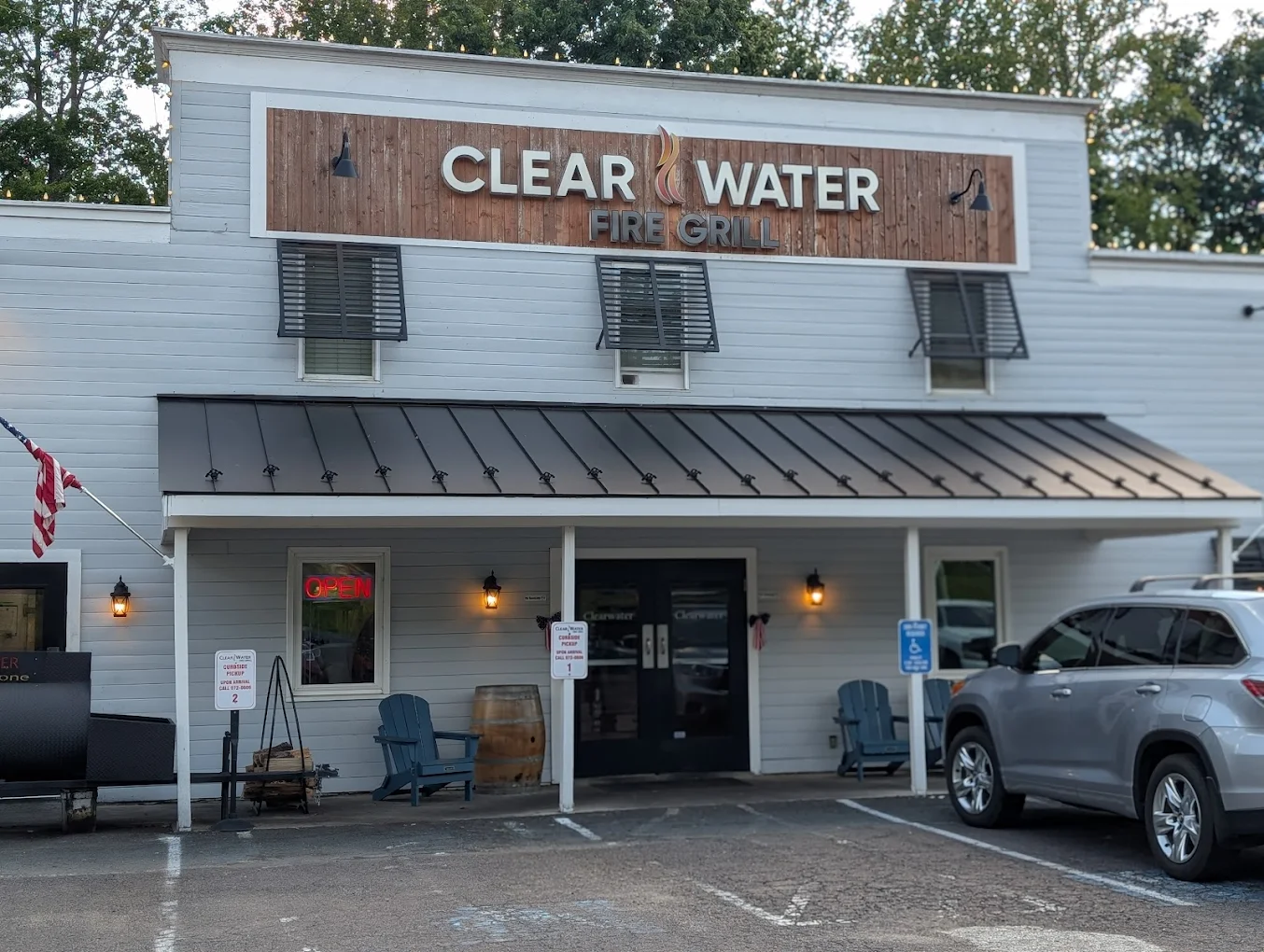
Clearwater Fire Grill Remains a Steady Presence in Locust Grove
March 2, 2026
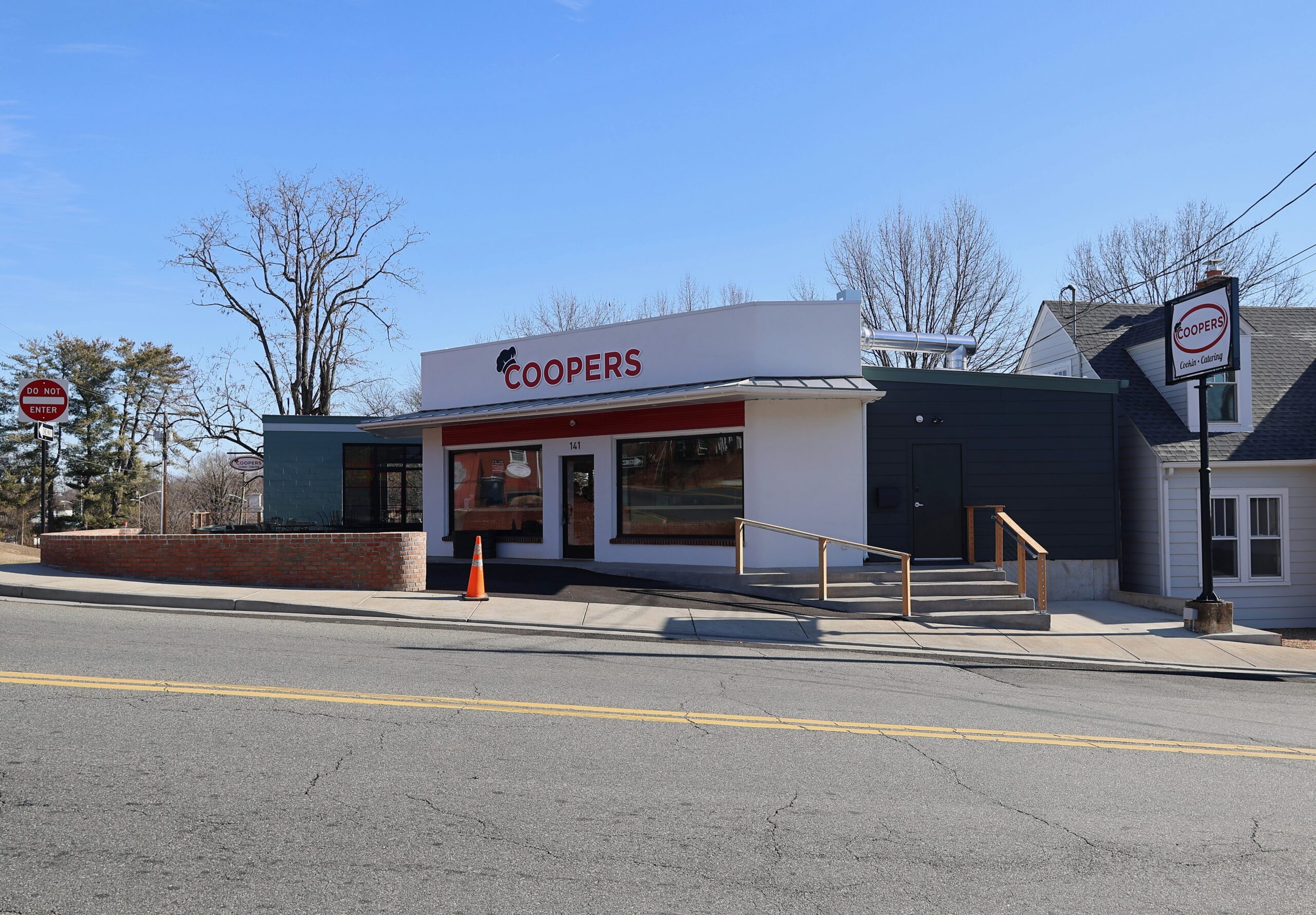
Coopers Cookin’ & Catering Connects Orange to a Reconstruction Era Food Tradition
March 2, 2026
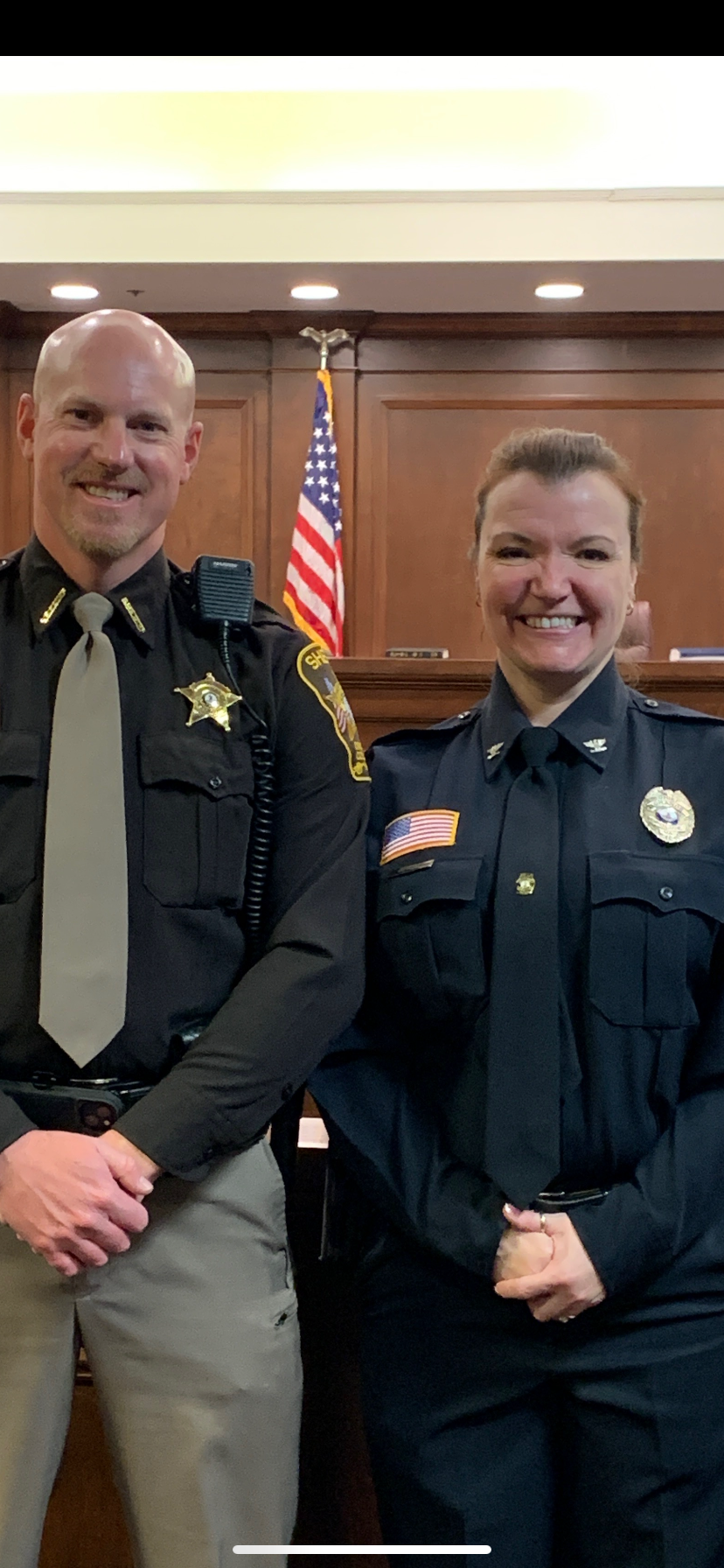
New Police Chief, New Town Manager Mark a Shift in Orange Leadership
March 2, 2026
From 3 to 7%: How Mortgage Rates Reshaped the Housing Market and What it Means for 2026

At Orange County High School, the drama program is far more than brilliant lighting, impressive set design and curtain calls. It is an energetic network in which the success of the program rests on a blend of focused leadership, inclusive community building, proactive learning, and strong administrative and civic support.
Led by the passionate and innovative director of the OCHS drama department, Robbie Kristel, the program has become a bright spot for the Orange community. Kristel’s program consistently delivers high-caliber productions that challenge and inspire both students and audiences.
Recently, I interviewed Kristel and three of his standout students in the Green Room, the backstage gathering spot for cast and crew preparation at the high school.
Accompanying Kristel were co-presidents Caitlin Clay and Lyra Day Tusing, along with vice president Eila Doane. Clay, a senior, has been in the program for four years, as has Tusing, while Doane also serves as stage manager for the majority of theater productions.
According to Kristel, more than 70 students are currently involved in the drama program, a number that continues to rise.
“We have about 70 students overall, and we continue to grow,” Kristel said. “Every semester we get a little bigger. We lose a couple and add a bunch, especially in the spring semester when we have a musical. Last year we had over 90 students involved in the musical, from students who helped paint sets to leads, pit musicians and those handing out programs. We try to find a job for everyone. We also have an in-school club and an after-school club. The two overlap, and you can be part of one and not the other.”
Far more than an extracurricular activity, the OCHS theater program is a vibrant environment where students build lasting relationships, cultivate indispensable life skills and, perhaps most importantly, discover their voices. Students are drawn to theater through a mixture of personal growth and a desire for creative self-expression.
Personal inspiration is fundamental to theater, allowing performers to infuse their work with emotional authenticity, depth and creativity. Many draw from their own lives to build relatable and impactful performances, which is why I asked the students how their journeys began.
Doane described her introduction to theater at a young age: “I was eight years old and had no homework and nothing to do, so I decided to join a musical,” she said. “It was Alice in Wonderland, and who I played isn’t the point. What stuck with me was the group of people. They took me in, and they were so kind. The amount of care they had for all of us stayed with me. When I got to high school, I took intro to drama my freshman year, and Mr. Kristel persuaded me to join the after-school program. Now I’m here, and I’ll stay. It’s all Alice in Wonderland’s fault.”
Tusing described her own rite of passage, “My family has always been arts-based,” she said. “My dad studied music, and my mom studied musical theater, so I grew up around singing and musicals. My first production was when I was six. We did Peter Pan, and I played Tinker Bell. I forgot all my lines, but from there it was all I knew. When I got to high school, I was excited to finally have a drama club. I brought a headshot and resume to my first audition because I thought it was very serious, but everyone was so supportive. I knew I wanted to stay, and that it would have a lasting impact on me.”
Clay described a more gradual entry into theater: “When I was younger, I watched movies and thought it looked really fun,” she said. “In middle school, my older brother auditioned for a show in Lake of the Woods, and I auditioned, too. I got ensemble. In eighth grade, my brother was in the high school drama program, and it looked like a lot of fun. I had to choose between volleyball, which I wasn’t very good at, or drama, so I chose drama. I made friends on the first day and decided to stay. It was a great decision.”
Kristel’s path to theater began later but proved just as formative: “I started drama my junior year of high school,” he said. “My dad was a football coach, my mom was tone deaf, and I had no experience in theater. I was a running back on the football team when someone told me they needed a lead dancer for the musical. The girl I had a crush on was auditioning, so I did, too. I got the part, I got the girl, and here I am.”
Kristel went on to participate in show choir and multiple productions before pursuing theater in college. After graduating, he chose education over a national tour and began applying for teaching positions along the East Coast.
“Orange was the school that hired me,” he said. “To give up time with my wife and young son and spend hundreds of hours here on top of teaching, it has to be a special place. When I took over, there were about nine students, and we rehearsed in a classroom. Over the last 12 years, the school has invested tens of thousands of dollars into our program and space. We don’t have the money of bigger cities, but we have the heart, and that’s what counts.”
A successful high school theater program culminates not in a final bow, but in the lasting transformation of its students. Performance becomes an expression of personal growth, collaboration and life skills that extend far beyond the stage.
“We’ve built this program into something that’s incredibly good for our students, our school and our community,” Kristel said. “We have over 70 students involved and do between five and 10 productions a year when you include classes and competitions.”
This fall, the program completed several productions, including a student-directed piece — the first in nearly a decade — and a VHSL competition show that won district honors in Winchester, advancing to regionals. Tusing earned outstanding actress at the district level and was nominated again regionally.
“These students took ownership of the show,” Kristel said. “They showed up every day, worked incredibly hard, and it paid off.”
Last year, the program also advanced to regionals and sent a student to nationals in the Shakespeare Monologue Competition at Lincoln Center. Record attendance, national arts placements and the addition of three new drama classes have positioned the program for continued growth.
I am sixth generation Orange County, Virgina. Our family farm is a Century Farm in Barboursville, established in 1848.
I graduated Orange County High School in 1977, received a Bachelor’s degree from James Madison University in Kinesiology/Physiology and attended the University of Virginia for graduate school (K-12 education).
I had a 30-year Personal Training Practice, retiring from that aspect of my life in 2017. This is my 37th year as a sportswriter, mainly with the Orange Review but for various newspapers across the Commonwealth. Currently, I have a podcast, “Hornet Buzz with Doug” that covers all Orange County High School sports and activities.
My wife Elaine and I celebrated our 16th Wedding Anniversary this past June (2025)
Subscribe for Updates
Sponsors
latest articles
March 2, 2026
Cowgirls (and Boys) Become Weekend Phenomenon at Unionville Brewery
March 2, 2026
County Program Launches Outdoor Adventure Series
March 2, 2026
Clearwater Fire Grill Remains a Steady Presence in Locust Grove
March 2, 2026
Coopers Cookin’ & Catering Connects Orange to a Reconstruction Era Food Tradition
March 2, 2026
New Police Chief, New Town Manager Mark a Shift in Orange Leadership
March 2, 2026
From 3 to 7%: How Mortgage Rates Reshaped the Housing Market and What it Means for 2026
Coopers Cookin’ & Catering Connects Orange to a Reconstruction Era Food Tradition
Newly relocated at 141 Caroline Street in Orange, Coopers Cookin’ & Catering serves Southern staples rooted in a family history…
Article By Judi Cooper
New Police Chief, New Town Manager Mark a Shift in Orange Leadership
The Town of Orange opened 2026 with a series of major leadership changes, headlined by the appointment of Rebecca Davis…
Article By Judi Cooper
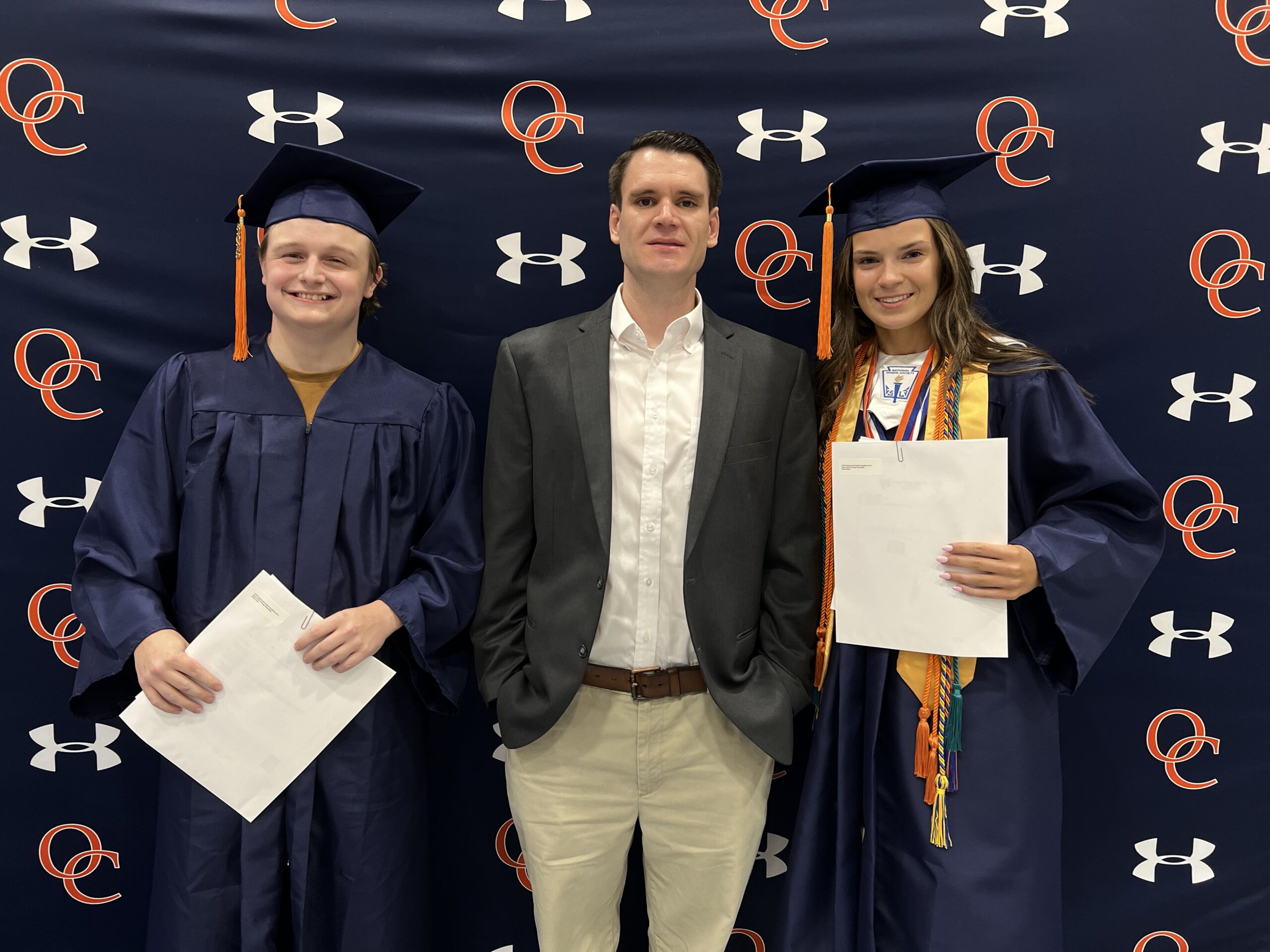
The OCHS Alumni and Friends Foundation Part Two: Interview with Founder Bill Hager
It is often said that graduation is not the end, but the beginning of a lifelong relationship with one’s alma…